The Reply Rate Math Problem: Why 50 Targeted Leads Beat 1,000 Cold Ones
BLOG · Sales Automation · B2B LEAD MATH
Est. read time: 6 min · Last updated: June, 2026
You're behind on your weekly send quota, so you do the obvious thing: add more contacts. Three hundred more this week, maybe five hundred. The list grows, the sends go out, and the reply rate quietly drops with every batch.
This is the default move in outbound, and it's backwards. The data says so directly.
The number that breaks the instinct
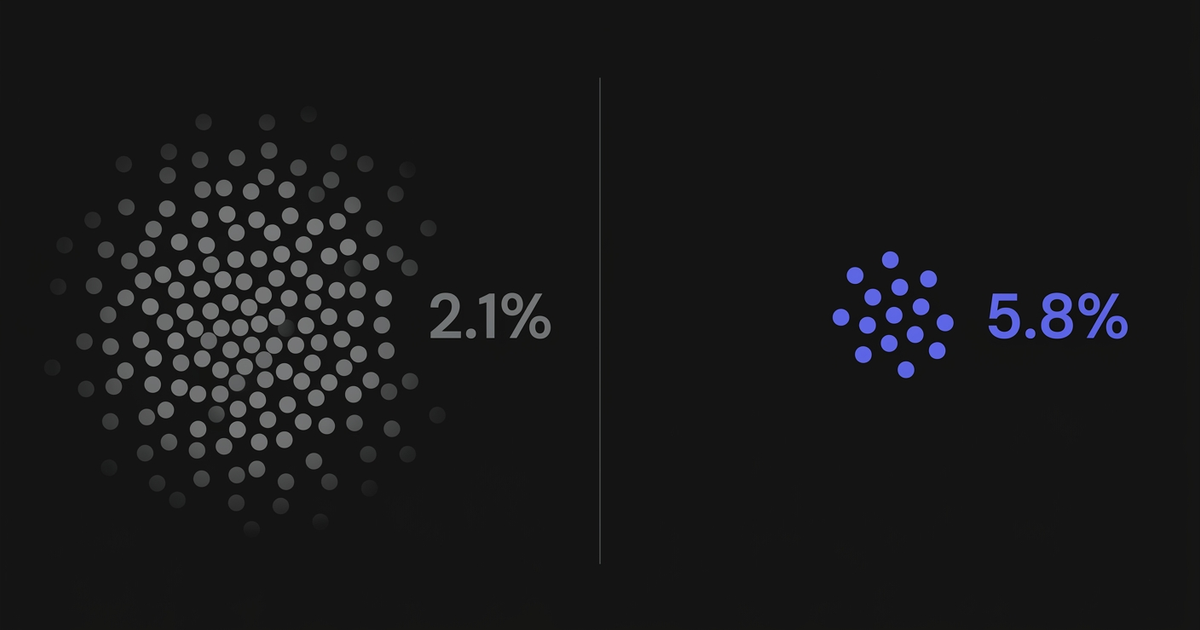
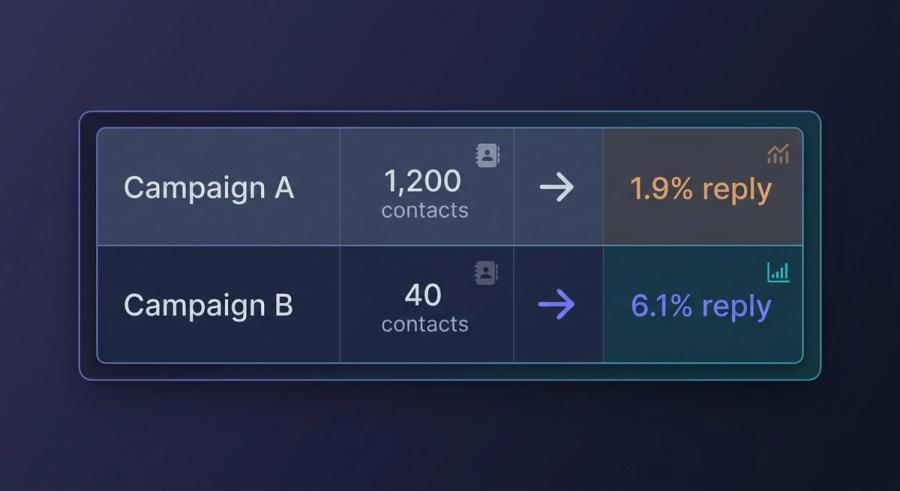
An analysis of 16.5 million cold emails found that lists under 50 contacts produced reply rates of 5.8% or higher. Lists over 1,000 contacts averaged 2.1%. That's not a small gap; it's nearly a 3x difference in the metric every cold email program is optimised for.
Most teams read a low reply rate as a copy problem. Rewrite the subject line, tighten the CTA, and add a personalisation token. But if the list is the wrong shape, no amount of copy editing fixes it. You're optimising the wrong variable.
Why are my leads bouncing? (FAQs)
Why does the reply rate drop as the list size grows? Larger lists are harder to keep accurate and relevant at scale. As volume increases, the percentage of contacts who are a genuine fit for your offer tends to shrink, even if total fit-count stays flat. You're not reaching more of the right people; you're diluting the list with more of the wrong ones.
Is this just about email deliverability, or is it about targeting? Both, but they compound. A smaller, tighter list is easier to verify and keep healthy. It's also more likely to be made up of contacts who actually match your ICP. Bad targeting and poor deliverability often show up together because the same root cause, list quality, drives both.
What's a realistic cold email reply rate benchmark for 2026? Across billions of sends, the broad average sits around 3.4%. That number means less than it looks like it does, because it blends high-performing tight lists with low-performing bulk ones. Your benchmark should be the rate for your list size and ICP, not the blended average.
Does this mean I should never send to large lists? No. It means list size should be a deliberate choice tied to targeting precision, not a quota you're filling. A large list of genuinely qualified, well-matched contacts will outperform a small list of poorly matched ones. Size isn't the lever. Fit is. Size is just what most teams pull instead, because it's easier to measure.
The mechanism: Why volume kills reply rate, not just inbox space?
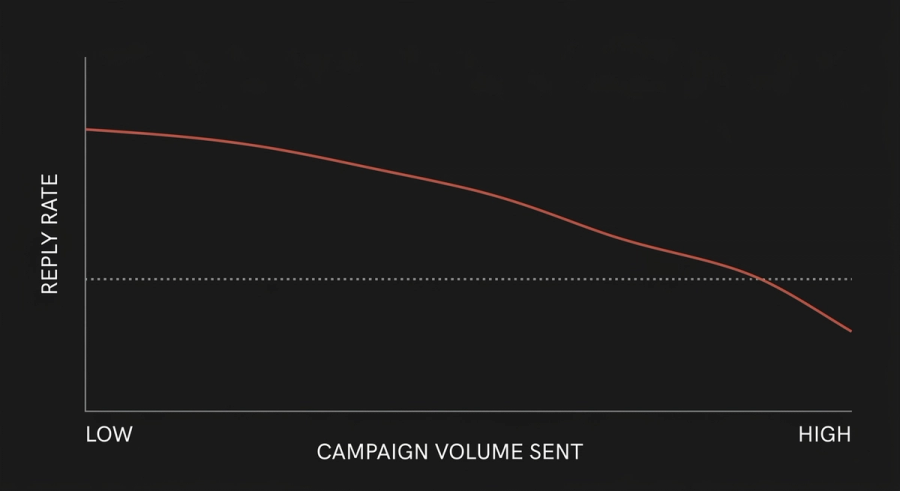
The Belkins data shows the correlation. A separate, widely-cited practitioner account shows the mechanism. One sender reported sending 217,000 cold emails and watching the reply rate collapse from 2.1% to 0.7% as the campaign progressed; domains burned out faster than they could recover.
This is the part most teams miss: volume doesn't just dilute targeting, it actively damages the infrastructure you're sending from. Domain and sender reputation degrade under sustained high-volume sends, especially when a chunk of that volume lands on contacts who were never going to reply in the first place. Every email sent to someone outside your real ICP is a small tax on the reputation of every email you send after it.
So the two effects stack. A bigger list usually means more mismatched contacts, and it means a faster burn on the exact infrastructure your good-fit emails depend on to land in an inbox at all.
What does "tight" actually mean?
Here's where it gets specific, and where most advice stops short. "Send to fewer people" isn't a strategy; it's a direction. The question that matters is: fewer people, selected on what basis?
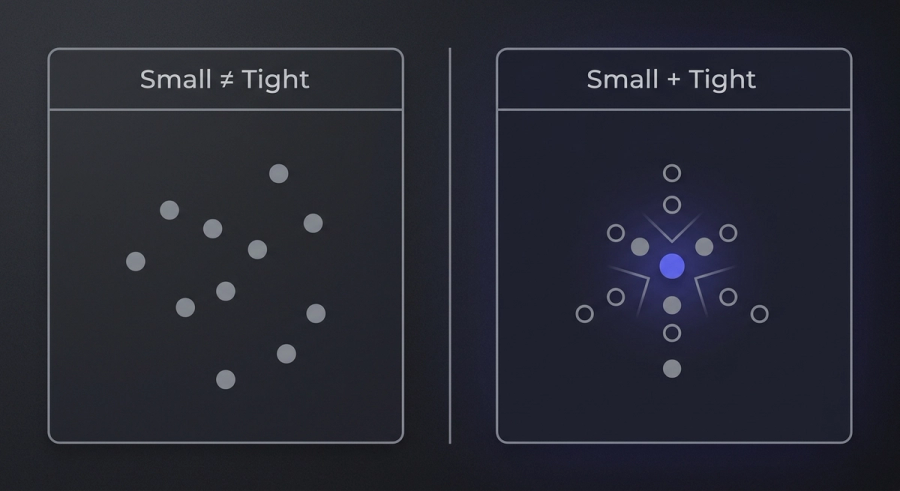
A list of 50 contacts chosen at random isn't tight. It's just small. The reply-rate advantage in the data comes from precision, not size in isolation. Tight means the list is built around real fit signals: company stage, buying triggers, operational characteristics, not just "matches our target industry on a filter."
That's a different problem than list size, and it's the one most teams skip past because it's harder to solve than just adding a filter. We'll get into what that actually requires in the next post.
What to do with this this week
Don't audit your subject lines. Audit your list-size-to-reply-rate ratio instead. Pull your last three campaigns, plot list size against reply rate, and see if your own data shows the same pattern. If it does, the fix isn't more volume or better copy, it's a harder look at who's on the list in the first place.