The SDR Tax You're Paying Even Without an SDR
BLOG · OPERATIONAL EFFICIENCY · BUYING SIGNAL
Est. read time: 7 min · Last updated: AUGUST, 2026
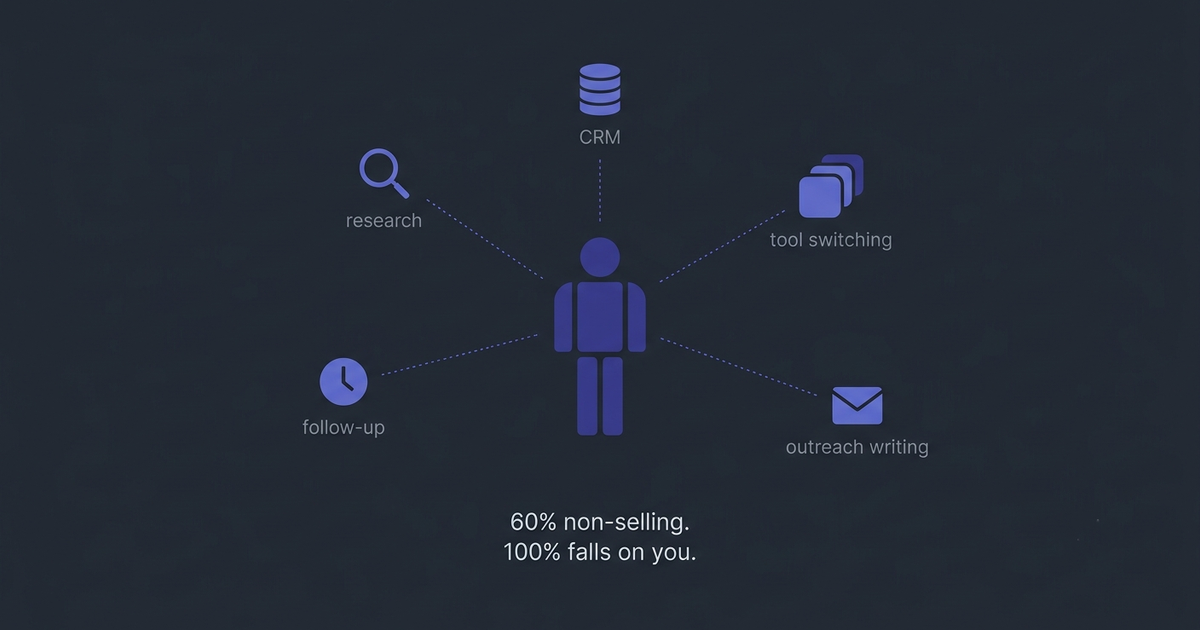
Sales teams have spent the last two years measuring how much time their SDRs actually spend selling. The answer keeps coming back the same way, from different studies, in different years. It's not much. Most of the week disappears into research, CRM entry, tool switching, and follow-up logistics before a single real conversation happens.
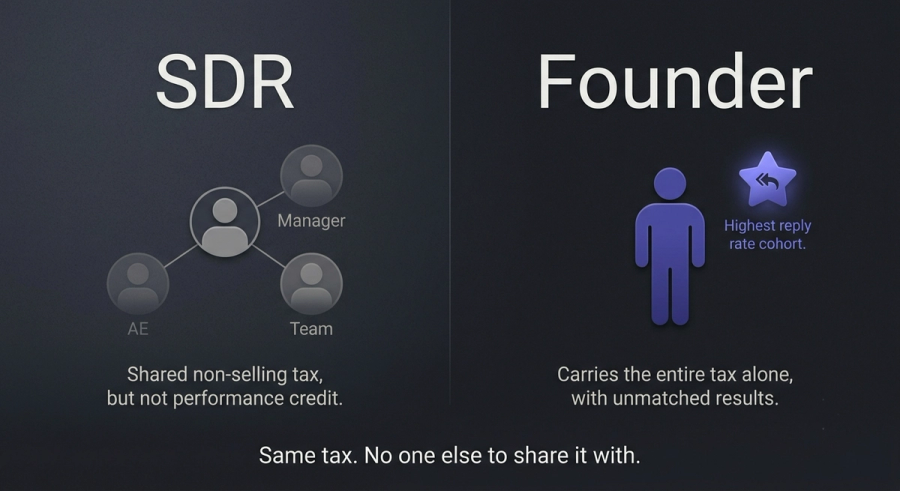
That's the problem as it's usually framed. Here's the reframe that matters if you're a solo founder: an SDR losing that time still has a team around them. An AE to hand off to. A manager splitting the account list. Someone else covering half the admin. You don't have any of that. The same tax lands on one person instead of being spread across a department, and that person is also supposed to be building the product and closing the deals that come out of it.
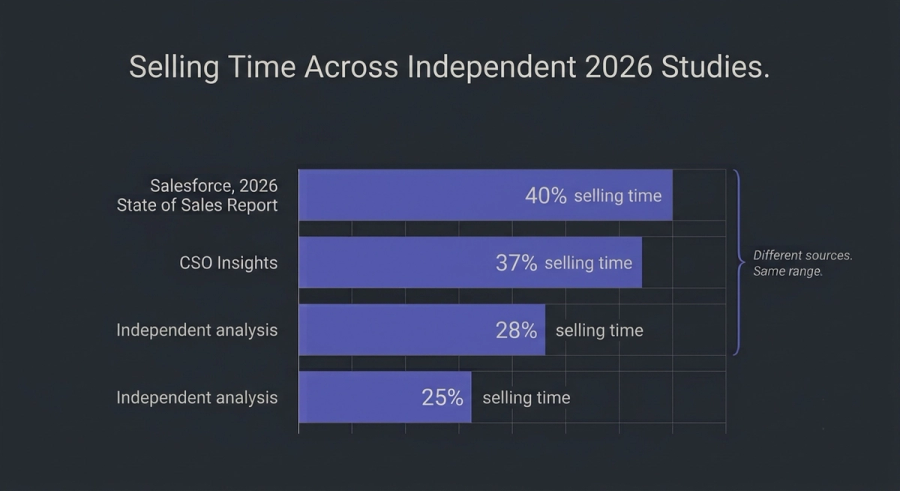
Salesforce's 2026 State of Sales report found that sales reps spend 60% of their time on non-selling tasks. That's not a fringe number. It shows up consistently across independent studies from 2024 through 2026, with selling time landing somewhere between 25% and 37% of a typical week depending on the study.
Now remove the rep from that sentence and put yourself in their place. A dedicated SDR losing 60% of their week to admin still has colleagues absorbing the rest of the sales motion. A founder running outbound alone loses that same 60%, and there's no one else to hand the remaining tasks to. The tax doesn't shrink because the team is smaller. It just concentrates.
FAQ: the SDR tax and what it means for solo founders
What is the SDR tax in B2B sales?
The SDR tax refers to the share of a sales rep's time consumed by tasks other than direct selling: prospect research, list building, CRM administration, tool switching, and internal coordination. Multiple 2026 studies place this figure between 60% and 75% of a typical work week, meaning the majority of time allocated to outbound sales isn't spent talking to prospects at all.
How much time do solo founders actually lose to outbound admin?
There's no dedicated research measuring founders specifically, but the underlying tasks don't change based on team size. A founder doing their own outbound still has to build lists, research accounts, personalise outreach, and manage follow-up, the same tasks an SDR spends the majority of their week on. The difference is that a founder has no one to delegate any part of that to, so the same time cost applies without a team to distribute it across.
Is this different for founders than for SDR teams?
The tasks are the same. The impact is not. An SDR losing 60% of their week to admin still has an AE receiving qualified leads, a manager adjusting priorities, and teammates covering different parts of the process. A founder losing that same 60% is also the AE, the manager, and the only person available to close whatever outbound eventually produces. The tax is identical in size and entirely different in consequence.
What tasks make up most of this lost time?
Across the research, the largest chunks are prospect research and list building, which several studies put at 10 to 18 hours a week on their own, followed by CRM administration, tool switching between platforms, and writing individually personalised outreach. None of these tasks is the actual selling conversation. They're what has to happen before that conversation becomes possible.
Why the pattern holds across every study
No single source drives this argument. That consistency is what makes it worth taking seriously.
One 2026 analysis found SDRs spend only 25% of their time on selling activities, with the remaining 75% going to prospecting logistics and administrative work. A separate industry report put real selling time at 28%, with the majority of the week consumed by data entry and CRM updates. A widely cited study found sales reps spend only 37% of their time actually selling. Salesforce's own 2026 report landed at 60% of time going to non-selling tasks.
The exact percentage moves depending on how a given study defines selling time, but every version of this research lands in the same range: somewhere between a quarter and a third of the week goes to the actual activity that produces revenue, and the rest goes to everything required to make that activity possible.
Problem for Founders/Solopreneurs
There's a detail from earlier outbound research that makes this pattern more costly for founders than for anyone else in the funnel. Founders and company owners reply to cold outreach at higher rates than any other seniority group, outperforming C-suite executives by a meaningful margin. Smaller companies, the kind founders are actually trying to reach, reply more often than larger ones.
That means the exact audience most likely to respond to outbound is also the one a solo founder has the least structural support to reach consistently. The 60% tax doesn't fall on a department that can absorb it. It falls on the one person trying to build the product, close the deals, and run the research and admin required to get in front of the highest-reply audience in the market.
This is the actual argument for automating the research and admin layer specifically, not the selling itself. The conversation still needs a person. The 60% that isn't a conversation doesn't.
What to check?
Track your own outbound time the way the research suggests most reps never do: to the actual minute, not the assumed minute. Log how long list building, research, and follow-up logistics take across a real week, separate from time spent actually talking to a prospect.
Most founders assume the imbalance is smaller than it is, the same way most SDRs do before they measure it directly. The number that comes back is usually the argument for changing the workflow on its own, without needing anyone to make the case for you.