What Lead Enrichment Should Look Like And What Most Teams Do Instead
BLOG · OPERATIONAL EFFICIENCY · B2B LEAD ENRICHMENT
Est. read time: 6 min · Last updated: June, 2026
Most B2B teams think they have a lead enrichment problem. They don’t. They have a definition problem.
Enrichment, in a way most tools sell it, means appending a job title, a company name, and maybe a LinkedIn URL to a contact row. That’s data appending. It fills a spreadsheet. It doesn’t tell you whether the person is worth reaching out to right now, whether they’re actively evaluating a solution like yours, or whether your message will land or be ignored.
The result is what everyone in B2B eventually complains about: enriched lists that still produce cold, unresponsive outreach. The data looks complete. The pipeline stays empty.
This blog breaks down what’s actually going wrong and what modern lead enrichment is supposed to do instead.
What Most Teams Actually Do
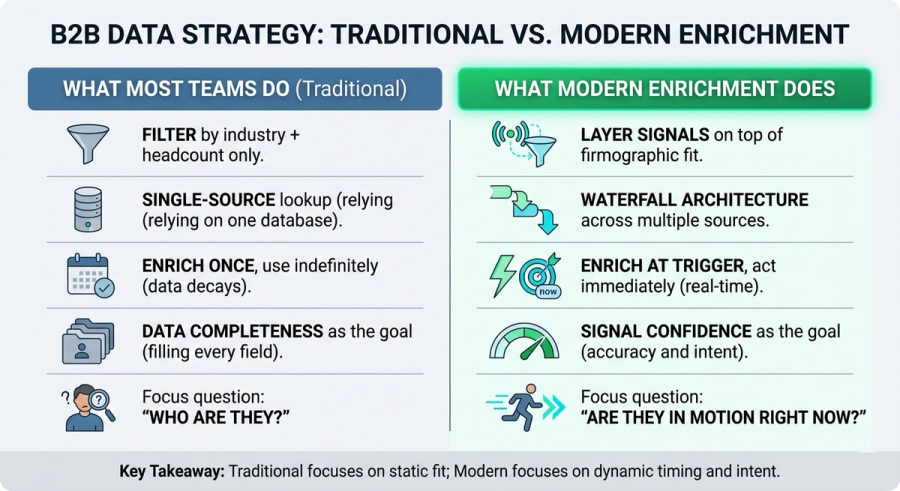
The typical enrichment workflow looks like this: define a target persona using firmographic filters, industry, headcount, geography and job title; export a list, run it through a single data provider, and push it to a sequencer. Done!
The problems with this approach compound quietly:
- Single-source lookups mean the data is only as accurate as one provider’s last crawl. For many databases, that’s months old.
- Firmographic filters capture who a company is, not what they’re doing. A 50-person SaaS company is always a 50-person SaaS company. That filter never tells you when they’re ready to buy.
- Lists are enriched once and used indefinitely. Contacts change roles, companies raise funding, tech stacks shift, none of that updates the static export sitting in your CRM.
The result is a pipeline that looks full but moves slowly, and outreach that feels generic because it is.
Why It Fails: The Signal Gap
Firmographic fit tells you that a company could be a customer. Signals suggest that they might be ready to become one now.
The distinction matters more than most teams realise. A company that fits your ICP perfectly but isn’t in motion is a cold prospect, regardless of how accurate the data is. A company that fits your ICP and is actively hiring for roles that signal budget, expansion, or a specific pain point, that’s a conversation worth having today.
Signals that actually indicate commercial readiness include:
- Recent funding rounds, which typically precede hiring and tooling decisions
- Job postings in sales, marketing, or revenue operations, which indicate growth investment
- Tech stack changes, particularly additions or replacements in adjacent categories
- Leadership changes, which often trigger vendor re-evaluation
None of these appears in a standard firmographic export. They require an entirely different enrichment architecture. The architecture layers signal context on top of contact data rather than treating the two as separate workflows.
This is the gap most outbound teams are operating in: fit without signal. The list looks right. The timing is wrong.
What Modern Lead Enrichment Actually Looks Like
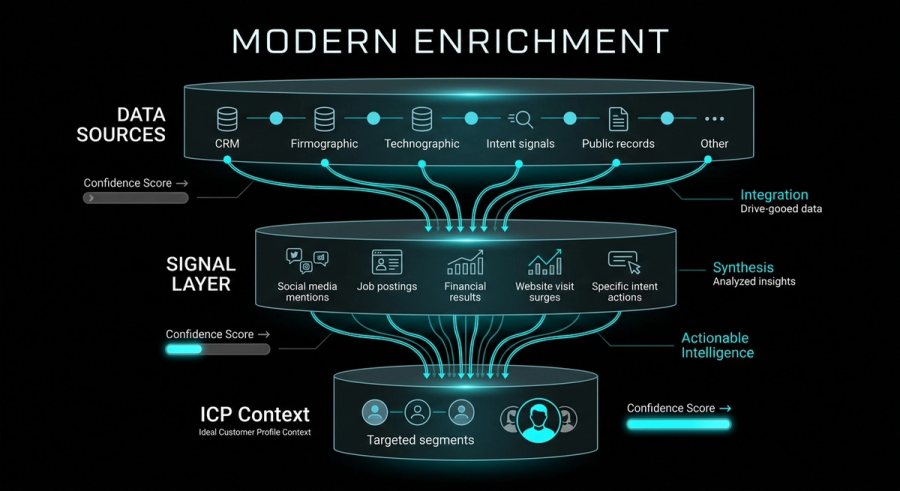
Modern enrichment is not about adding more data fields. It’s about building confidence; confidence that the contact is the right person, at the right company, at the right moment.
That requires three things working together:
1. Waterfall architecture across multiple data sources
Rather than querying a single database and accepting whatever comes back, a waterfall approach queries multiple providers in sequence, filling gaps and cross-referencing results. When the same data point appears across two or more independent sources, that’s a confidence signal in itself. When sources conflict, that’s a red flag, not a green light.
2. ICP context engine, not just a filter
Static filters ask, “Who fits?” A context engine asks, “Who fits, and what do we know about their current situation?” The enrichment output should carry enough context to inform the message, not just populate a field in a CRM row.
3. Enrichment tied to outreach, not separated from it
The biggest structural failure in most outbound stacks is the gap between enrichment and execution. Data lives in one tool. Sequences live in another. The context rarely survives the handoff. Modern enrichment closes that gap by keeping the signal layer and the outreach layer in the same workflow.
The Outreach Connection
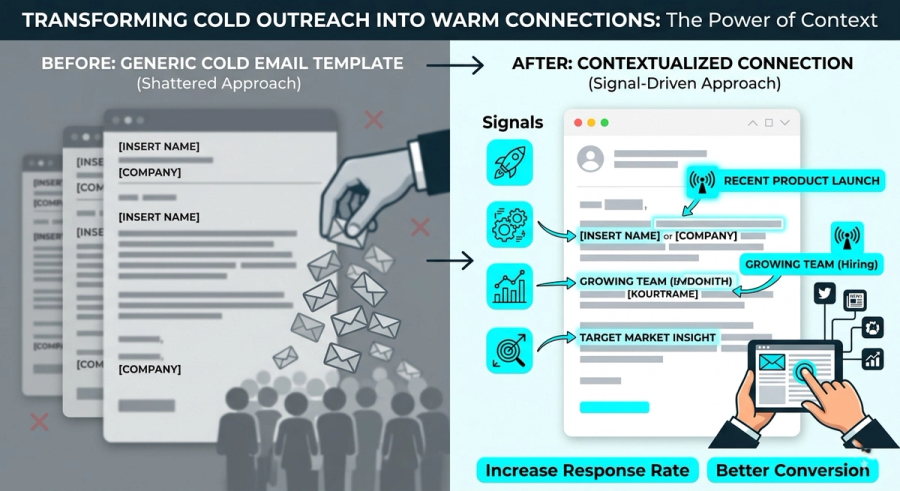
When enrichment carries signal context, the outreach message almost writes itself. You’re not crafting a generic cold email to a job title. You’re crafting a message to a specific person at a company that just raised a Series A, is hiring a VP of Sales, and is running HubSpot without a data enrichment layer.
That specificity is the difference between a 1% reply rate and something worth building a pipeline on.
The direction the category is heading makes this even clearer. Enrichment tools are evolving from data providers into GTM infrastructure. Systems that don’t just tell you who to contact but surface when to contact them and with what angle. The teams that understand this shift early will build outbound motions that compound. The teams that don’t will keep buying enriched lists and wondering why nothing converts.
RELUMIT works around this principle
Waterfall enrichment, signal-aware ICP matching, and automated outreach in a single workflow, designed specifically for B2B teams that want to close more deals and grow.
Join the waitlist